

2026-11-11 · 2 min read
What a Screw Actually Does — and Why Sourcing the Right One Matters More Than You Think

what-a-screw-actually-does-and-why-sourcing-the-right-one-matters-more-than-you-think
Every machine you use, every vehicle you ride in, and every building you walk through is held together by screws. A screw may be only a few millimeters in diameter, yet it can carry tens of thousands of times its own weight. It works quietly inside assemblies, and when it fails, the whole structure pays the price.
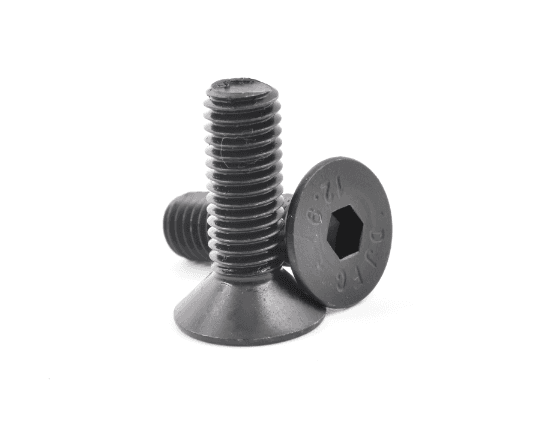
Most buyers, however, treat screws as a commodity. They look at length, diameter, and price. They rarely ask about the thread form, the heat treatment, or the salt-spray hours. This article walks through what a screw actually is, why it loosens, where buyers get burned, and why more and more procurement teams are going directly to source factories rather than through trading houses.
A nail works because you drive it into wood or metal, the material grips the shank, and friction holds it. A screw works on a completely different principle. The thread is essentially an inclined plane wrapped around a cylinder — the same geometry Archimedes used to lift water, and the same geometry taught in every mechanical engineering textbook today.
When you turn a screw with a wrench, you are walking the fastener up that inclined plane. As it advances, it pulls the clamped parts together. The force that actually holds the joint is not the screw itself in tension — it is the preload, the compressive force between the clamped parts. The thread keeps that preload in place through self-locking. A smaller thread lead angle (the helix angle) improves self-locking; coarse, large-pitch threads under sustained vibration are far more likely to back off on their own.
Engineers do not look at a screw the way consumers do. They look at thread specification, thread form, and tolerance class. An M8 coarse-pitch screw and an M8 fine-pitch screw behave very differently in self-locking, transverse-vibration resistance, and fatigue strength. The same nominal 8 mm diameter splits into A, B, and C product grades. Those numbers are not marketing — they are decades of industrial standardization.