
2025-12-10 · 8 min read
Types of Screws, Bolts and Nuts: A Practical Reference for Buyers
Fasteners are the hidden backbone of mechanical connections. Understanding the basic types of screws, bolts and nuts helps buyers specify the right product and avoid costly mistakes.
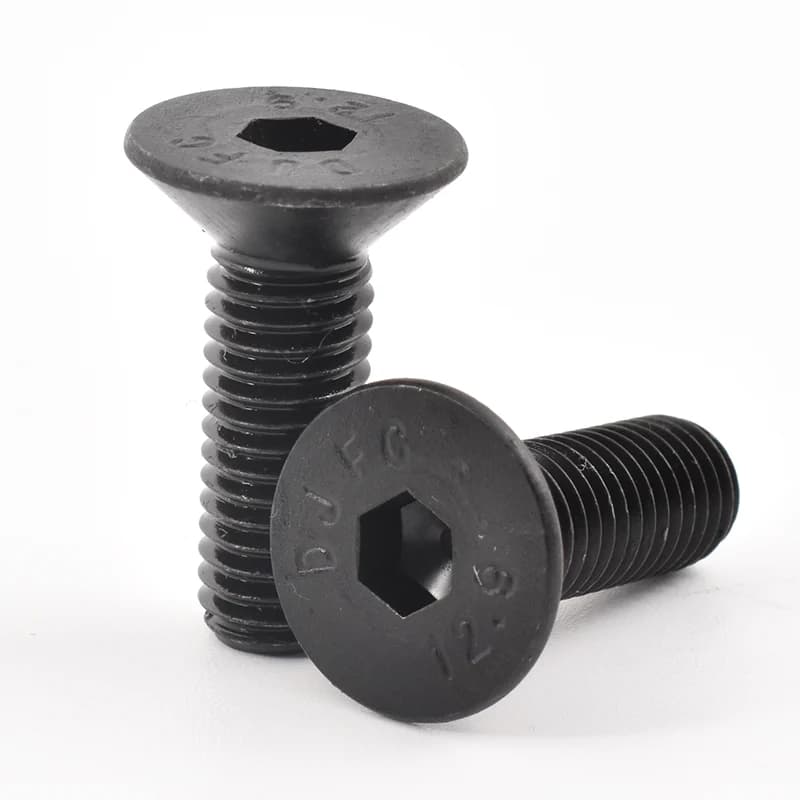
Slotted ordinary screws are mostly used for smaller parts, with pan head, cylindrical head, semi-countersunk and countersunk variants. Hex socket screws can be buried in the member, apply greater torque, and are often used where a compact structure and smooth appearance are required.
Set screws fix the relative position of parts: cone-end and cup-point ends bite into the mating part, flat-end set screws suit frequently adjusted positions, and cylindrical-end versions carry larger loads.
Self-tapping screws form their own thread in thin metal plates, while self-tapping locking screws add a triangular thread profile for higher locking performance.
For hexagon head bolts, class C ordinary bolts are common in temporary or disassemblable connections, while high-strength bolts (M16–M30) are used for permanent connections in building structures. High-strength bolts are either friction-type or pressure-type depending on the design calculation method.
Nuts connect with bolts of the same thread specification — for example, an M4-P0.7 nut only matches an M4-P0.7 bolt. Stainless steel options include self-locking nuts, flange nuts and crown thin nuts, while steel options cover hex full nuts, lock nuts and flange serrated nuts.
When in doubt, share your standard, size, material and application with our team — we will help you select the right fastener.